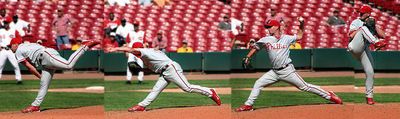
A New Season of Baseball Fun for All is Coming

Major-League Baseball will once again be upon us. Spring Training has begun and again brings with it New Hopes and the resurgence of enthusiasm that stimulates life on the American and International Canvas. The most ardent of baseball fans are looking forward to fulfilling their great expectations with relish, and of course Hot Dogs, Peanuts, Popcorn, and Crackerjacks.Baseball fans 1baseball fans 2baseball fans 3baseball fans 4baseball fans 5

Baseball is truly America’s national pastime. It not only epitomizes the “new-wave” national standard for universal “equality for all”, but characterizes the highest sentiment for democratic reform throughout the world. The indigenous character and homespun heritage of our country’s National Pastime foster the innovative and endearing qualities of America that can transform a competitive world into a peaceful arena willing to incorporate the essence of those qualities into an enduring fabric conducive to all spiritual, mental and physical environments.coaching 8

As we have seen displayed on the Inter-National playing-field, jubilant participants have  contributed to a universal camaraderie where the peace of goodness has been applied and appreciated. The Game of Baseball is the ultimate in sports activity! To all participants, players, fans, and officials  its unique simplicity conveys a human drama, and then reveals and resolves the complexities that would elicit trauma from mortal life’s uncertain circumstances.  “Could mere human contrivance order such preciseness, from the tri-hedral dimensions of the field of play, to the definitive specifications and range of intricate function for the designated participants?” – Socrates (from Plato and Socrates: Baseball’s Wisest Fans – by John F. Paciorek)

As the world has fast become a theatrical stage for public sentiment to display both outrageous and benevolent characterizations of humanity, a universal demand for the highest possible standard of excellence can be embodied by those who would be model-heroes for aspiring youth. “Conceptions of mortal erring thought must give way to the ideal of all that is perfect and eternal.”coaching 4Coaching 1

As a professional Baseball Player myself, and subsequently a perennial fan and teacher of the “fundamentals”, my thought(s) about the “Game” gradually has been transformed from that of vigorously active participation to vicariously passive appreciation. My life’s purpose is no longer striving to be the greatest athlete, or baseball player, nor is it to fulfill my physical potential. I have simply come to recognize that my sole purpose is to experience “Goodness”.

So, starting my day from a spiritual basis, I begin looking for and anticipating those human experiences that afford me the opportunity for “Maximum of Good”. Good is God! God is not only good; He is All the Good that is and can be. The Psalmist states in at least four verses, “Oh, that men would praise the Lord for his goodness, and for his wonderful works to the children of men!” Jesus himself was not only the excellent example of God’s Goodness, his “Gospel” message promoted the “Good News” of Our Father’s ever presence. The ancient Greeks inter-changed the terms excellence and “virtue” to mean the same. And again the Bible describes the “Virtuous Woman” as finding “goodness” in everything she did from morning ‘til night.

Every man’s search for Goodness must begin with God, and vice-versa. In every venue of human life experience can be found opportunities to witness a glory emanating, even gradually, from the prospect of goodness. On the amateur level, parents and other adults support the nurturing cause of developing educational and recreational activities for prospective leaders and rising stars, while appreciating every good or enhanced step along his/her way.Baseball - Jesus

But, we find excellence displayed to the utmost in every venue of the Professional realm. The “maximum of good” is what people pay money in order to vicariously experience the ultimate satisfaction in Sports, Movies, Theatre, Opera, and all other forms of genuine Escapism.

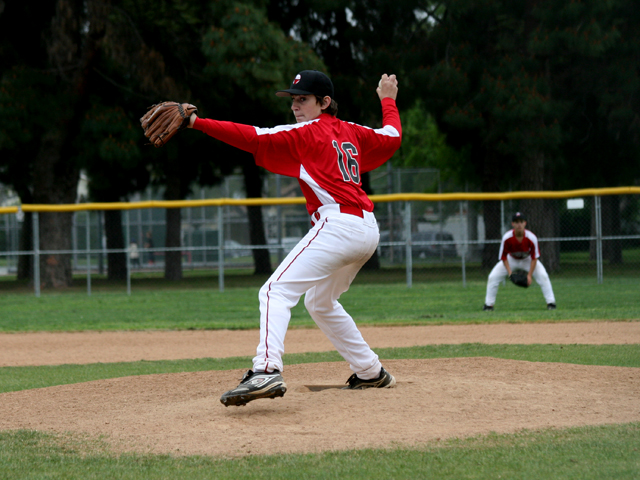
When I go to a Major-League Baseball game, I am expecting to have the experience of witnessing the “maximum of good” that the highest level of the Sport can deliver to my full appreciation. It is a “Spiritual Experience”, at which, and for which I am never disappointed, no matter which team wins. When I go to a Little-League game, I don’t have the same “high-expectation” of “excellent” performance, but I do look for every slight indication of Good’s presence in the intentions, enthusiasm, sportsmanship, and mechanical application of skill of all the participants.pony_baseball_04

Baseball will always be America’s endearing National Pastime to me, for whom the season never ends, even though it is again just beginning.

John Paciorek played for the Major League Houston Colt.45s. (Currently, Astros).  He now teaches Physical Education and coaches Sports at Clairbourn – School in San Gabriel, CA. He has written two books: The Principle of Baseball, and All There is to Know about Hitting; and, Plato and Socrates: Baseball’s Wisest Fans; and is the subject of a new Book, entitled, Perfect, by Steven Wagner.

Fun: From Inside the Batter’s Box

It is no secret in the Big Leagues – unless you are a pitcher or the “slickest” of fielders with a rifle-arm and “speed-a-foot”, your chances of making it to the “Show” and staying there are “slim and None” if you can’t HIT!. But most batters who had been signed to play professional Baseball had been thought of by their parents and “home-town” fans as decent hitters at one time or another.

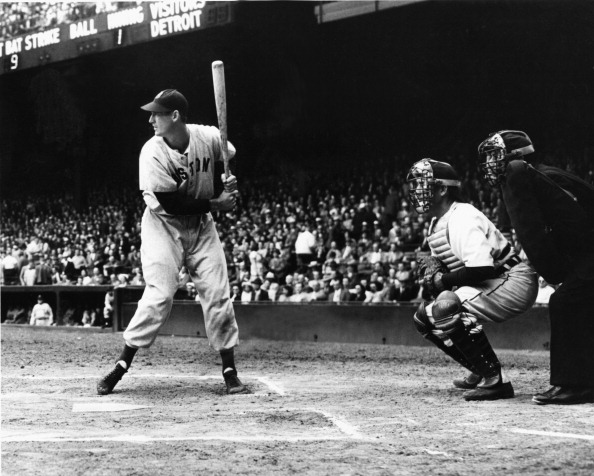
Ted Williams exclaimed it first, but probably many before him realized the fact, and, assuredly, every athlete who has been privileged to experience the physical, mental, and emotional tension associated with swinging a baseball bat under game conditions can verify, “Hitting a baseball effectively is the most difficult thing to do in all of sports”.strike-outStrike-out 3strike-out 10

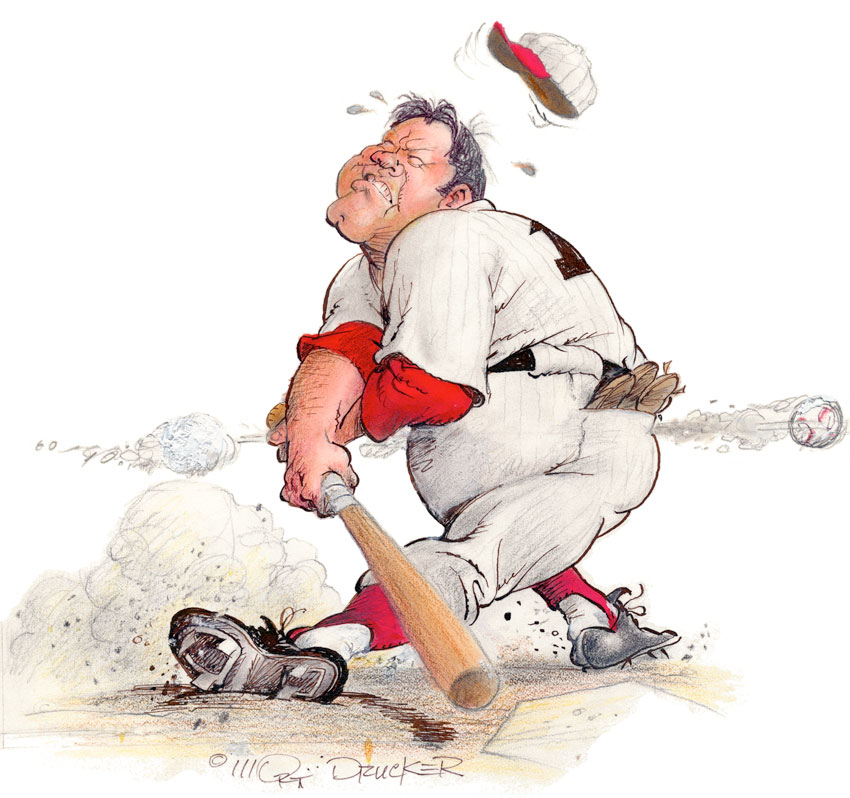
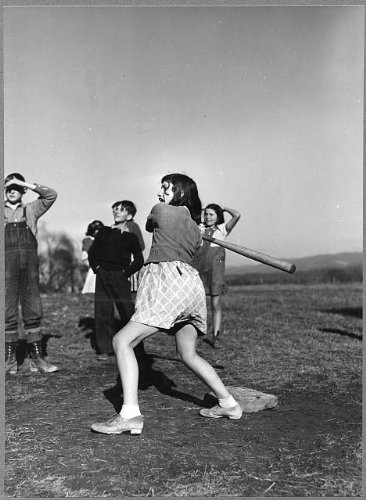
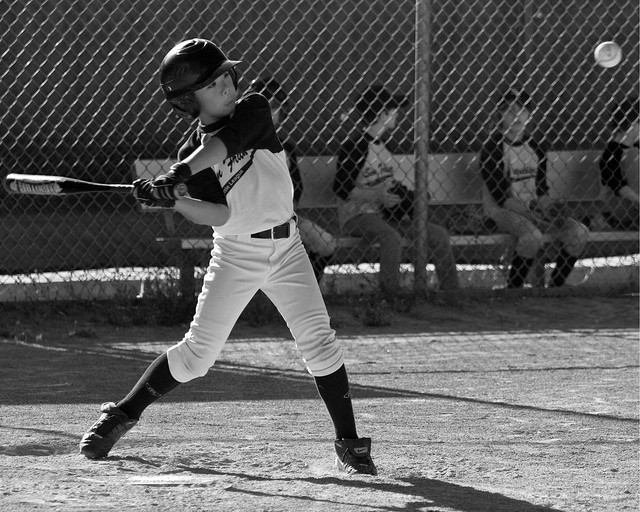
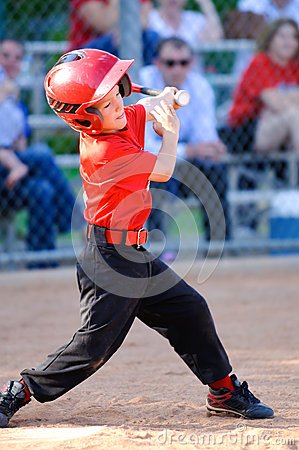
Many people, men, women, boys, and girls love to swing a baseball bat at a baseball (softball). It seems a pretty fair accomplishment—mentally sizing up the speed of that spherical object floating in a relatively straight path toward a designated area for the “batter” to physically strike with a long narrow cylindrical piece of wood or aluminum. It’s really fun! The skill involved is not just physical; the mental aspect includes the quick discernment of time, space, and geometric calculations, (and much more intense at the Big-League level). That’s why baseball (softball) games at family picnics and other recreational environments are such crowd-pleasing activities. And if no one gets hurt, it’s even more enjoyable!girl swinging baseball bat 1Boy swinging baseball bat 1Boy swinging baseball bat 2

For those who get involved at a more intricate level, like Little League, the game speeds up a little bit. The batter doesn’t seem to have as much control, as when dad or mom was pitching the ball. But the game is still fun; you just have to take it a little more seriously, more figuring and adjusting to more variables. And when your bat makes “good contact” the exhilaration is more intense and meaningful, even though your hard hit grounder goes through the shortstop’s legs for a base hit.

When you make it to Little League Majors, the pressure can almost seem too daunting. Everyone is bigger and stronger. You start asking yourself, “how am I going to maintain my .850 average? Then reality sets in, and more adjustments (physically, mentally, and emotionally) have been made, and you feel pretty grateful to sustain a modest .530 batting average. The .320 drop is attributable to the “curve ball”!strike-out 6

As a thirteen year-old, in Pony League, you’re now playing on a field where the bases are 23 feet farther, and the pitching rubber is 54 feet from home plate, instead of 45. Mental and physical adjustments have to be made! The pitching distance is farther; but the pitcher is bigger and stronger; and the ball is thrown faster, and it “hurts” a lot worse. (Remember, this is where your most imaginative 14 year-old pitcher starts to work on his “split-finger”, and assortment of other pitches, for which he no doubt will throw his arm out and diminish all chances of making the High School team, and the “Bigs”.) Therefore an emotional adjustment is in order—“do I really want to play Pony League, or High School Ball?”pony_baseball_04pony_baseball_5pony_baseball_3

With a year of “Pony” under your belt, you’ve made the necessary adjustments. You’re bigger, stronger, and back in dominating form! New standards have been acquiesced, and your .400 plus batting average is a given. Your size and physical ability give you overwhelming confidence, and the High School coaches reinforce your attitude with constant pandering. Watch, stride, and swing—that’s all you had to do, and pretty good contact with the ball gives you a hit 2 times in every 5 at- bats, every once in a while, a towering home-run. Hitting a baseball doesn’t seem that difficult! Sure, every once in a while, in tournament play, one or two pitchers seem to be overpowering! Should you make adjustments just for them? (You have not yet learned about the Big Fish in the Big Pond syndrome.)pony_baseball_1pony_baseball_6

High School provides a whole new experience for the “naïve” hitter. Until now, most instructors of the “art” of hitting have been parents, who didn’t claim to be infallible artisans of the craft but only slightly more than incompetent advisors whose lack of expertise couldn’t do much harm to a blossoming prodigy. Where the Little League coach pampered the players, because his son, daughter and neighbors’ kids were on the team, and didn’t want to risk offending anyone, along with the rule that everyone had to play, the Public High School coach has no such reservations to inhibit his personal, somewhat tyrannical resolve to develop the potential of the players for his team. If you don’t produce on your own recognizance, you’d better follow his specialized techniques, or risk “riding the pine” for the “duration” of your High School career, while lapsing into baseball oblivion.mean baseball face

During those High School years, the baseball player begins to realize that hitting a baseball consistently well must be the most difficult task in all of sports. Once this realization becomes prominent in the minds of the most determined hitters, an inexplicable desire to challenge the inescapable assumption that mere mortals are incapable of surpassing the pre-determined range of superlative achievement for batting excellence! To ever hit .400 again, on the Major League level seems impossible, and preposterous to think it could be done on a consistent basis.

After High School, those individuals who go into the college ranks or professional Minor League baseball quickly discover that mere physical enhancement will not entitle players to climb the ladder of developmental success. Even with the greatest of physical attributes, the acts of seeing, striding, and swinging the bat do not always procure the most beneficent effects. Thoughtful consideration of a good many aspects of the entire batting regimen must be understood and applied conscientiously, in order for maximum proficiency to be demonstrated.

The question has been, and might always persist, what is the proper regimen for establishing a technique that will procure the consistent, maximum effect while hitting a baseball? Many have theorized about the prospect, but only a handful have established credibility through their practical applications and thoughtfully spoken and written delineation. But, of these, the closest to extracting a complete and understandable facsimile of truth has been Mr. Ted Williams, who happened to be the last Major League player to bat .400 over the course of an entire season. Unfortunately, those who attempted to understand and follow his astute analysis of hitting perfection, misconstrued his intent, and misguided countless devotees into a darkened abyss of probable incompetence.

Aristotle pointed out, in his Nicomachean Ethics, that, in order to begin a study of anything that would lead to the highest understanding and demonstration of its universal verity, one must “behold” an example of a closest facsimile to the ideal estate, study its admirable characteristics, and extrapolate from its obvious functional proficiency a common entity by which a generic standard could be discerned, duplicated, and possibly expanded upon. Excellence in any field of human endeavor is achievable to anyone willing to devote a “heart and soul” effort toward mastering the definable concomitants to successful enterprise.

Major League batters are at the pinnacle of their vocational pursuits. Yet, within their own ranks can be found distinguishable differences in individual mastery of skills and technique. The batters who would become excellent performers are they who would follow the example of the “martial artist”, by adapting to his study and application of fundamental movement principles. However, the alternative to taking martial arts classes would be to find someone in their own profession, who is renowned as a masterful exponent of their own respective art of batting. In other words, “mark the perfect man, and behold the upright”.

“Upright” does not refer to body-position while performing tasks. The more upright the body, the higher is the center of gravity. That’s not good in most sports situations. A low center of gravity is always preferred for short, quick, and strong movements of the body in all sports activities. Upright, in the biblical context, refers to intelligent, principled thoughtfulness that always precedes masterful behavior or action.

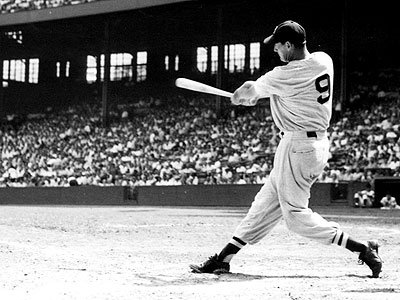
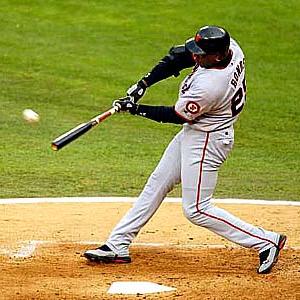
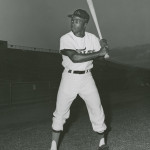
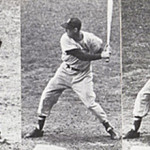
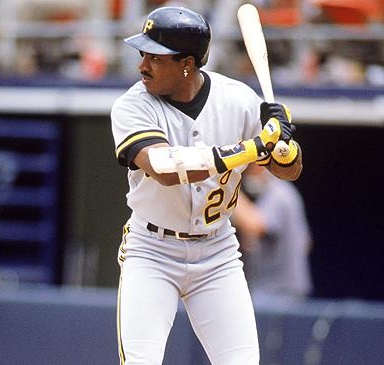
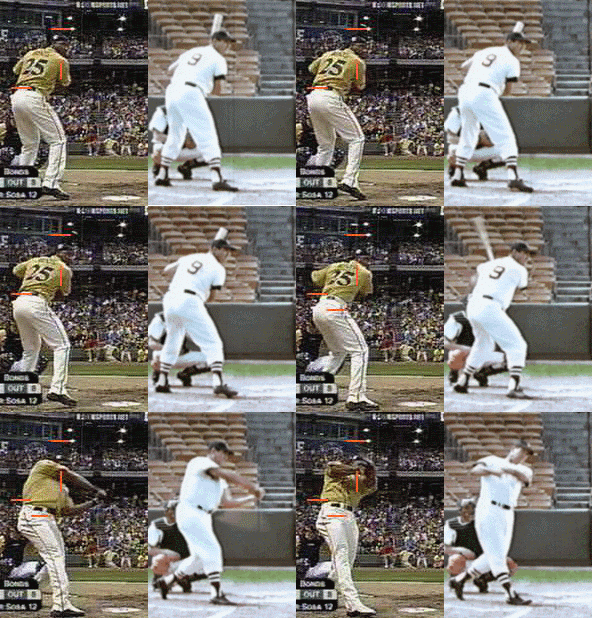
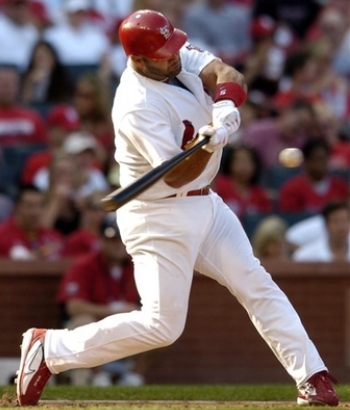
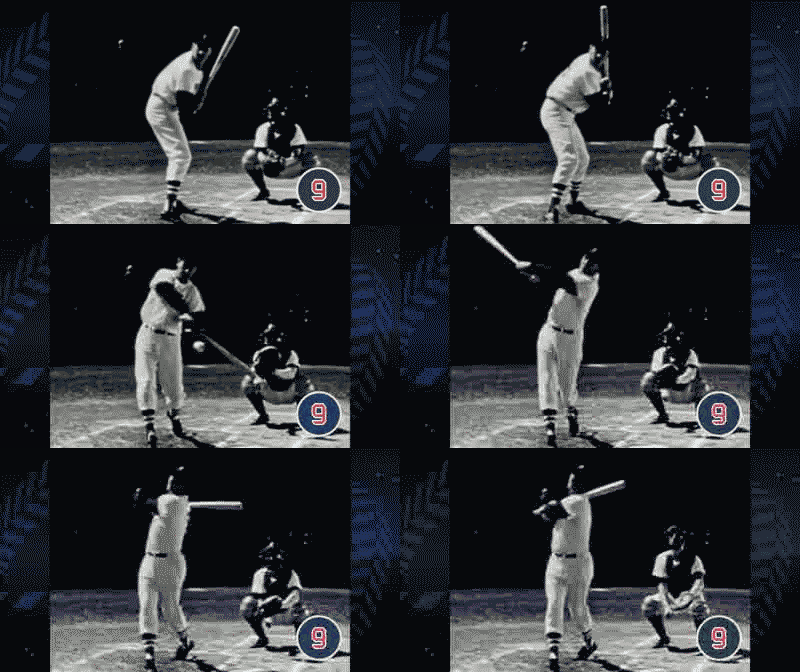
Barry Bonds and Ted Williams are the batters whom all prospective “high achievers” should emulate in order to attain a facsimile of credible “Excellence” and bring the fun back into their respective “hitting-game”.Ted Williams - swingBarry Bonds 1


Fun and Baseball

Fun: The Way to Baseball Happiness!

By

John F. Paciorek

How can I have fun playing baseball if I am 5 years old and have never before played the game? I have never caught, thrown, or batted a baseball.  This scenario might be considered a “stage 1” category of developmental (kindergarten level) inquiry.

A 5 year old who would ask such a question must have seen the game being played by children his age (or perhaps older) who appeared to be having fun. He must have noticed the children hitting, catching, and throwing a round ball while running to and from various positions on a diamond shaped field with fence around the perimeter.

IF he had not someone to show or teach him the simple fundamentals of playing the game, perhaps his imagination was cultivated enough to allow him to pretend that he too could perform the actions that he saw being displayed on that field or park, in the privacy of his own mind. As his body was becoming more capable of mimicking the actions of throwing, catching, and batting imaginary objects in and from the “air” while running bases and chasing balls from fictitious projections of his mind, he might have elicited from himself a readiness to experience the real thing if and when the opportunity presented itself.

I can only imagine what may have become of this erstwhile baseball prospect, but I saw firsthand how my 3 year-old brother initiated his baseball career. I was a senior on my High School baseball team in the early 1960s. All my relatives and sometimes professional baseball scouts would come out to see me show off my particular talents.

Our team often played its games on Sandlot fields with 3 other adjacent fields back to back to back. Sometimes all fields were being used at the same time. Other times, only one field was in use.

It became common occurrence that while my game was proceeding on field one, my little brother would look forward to watching my game for a while. Then after moments of gaining inspiration and enthusiasm, he would run off to field two, directly behind mine. And there he would stay for 7 to 9 innings mimicking all the action he saw displayed on field one. Coaching10Pretending to pitch the ball, then hitting the pretend ball, then running the (real) 90 foot bases, sliding into 2nd, 3rd, and home bases. baserunning8 (Baby2)He would usually continue this exuberant activity for my entire game. And it wouldn’t be uncommon to observe the people in “our” stands looking over the guard railing onto the adjacent field watching the antics of a remarkable young baseball prospect in the initial stages of his long baseball career.

Is there ever any fun in any endeavor that presents no prospect for winning? Fun and profitability can be found only in the patient, subsequent, sequential learning and properly proficient application of the skills (physical, mental, and psychological) that are entailed in the ultimate prospect of WINNING! Everyone can be a “winner” according to the extent to which he diligently ascribes to the preceding statement.Coaching 1

A notable historic Persian Poet, by the name of Rumi implies that, in all of life’s competitive encounters, there is a viable alternative to the traditional conclusion that someone wins while another loses. From this we can assume that no one really wins unless everyone wins.

The greatest motivational tool to learning and teaching is to have fun. The teacher has fun by seeing his students have fun. He vicariously puts himself in their place and visualizes how he might have enjoyed that same experience when he was of their age.

The student(s) have fun by first giving the teacher the benefit of not doubting his intent to increase their knowledge and understanding about the subject in order to allow them the opportunity to improve their proficiency in applying themselves to the lesson pertaining to their own prospect for winning an improved status in Life itself.Coaching 2

With all my youngest students, I generally ask if they are ready to have FUN.  Their hearty reply is always the first indication they are ready to accept my instruction and commence on a joyful journey of fun by way of enhanced application of learning.

My older students already know from past experience that they are going to have fun, but don’t always accept willingly the prelude to their version of fun in the form of preliminary exercise and warm-ups. They want immediate access to the more “meaty” subject matter.

Some perform the “ritual” vigorously, with the apparent understanding of its ultimate benefit to those wanting to be the best they can be. Others half-heartily go “through the motions,” perhaps thinking they are preserving energy to perform more adeptly at the later stages of the lesson.

But as long as each student has a smile on his/her face, I know learning to varying degrees is taking place. And each, to his own degree of substantive learning, is a winner, to that degree.

In Sports, either during an innocuous game in P.E. and recess, or vigorous inter-scholastic competition, the primary purpose for which each player is participating is to WIN! But winning, to most participants, is the act of being victorious over an opposing team or individual.

But those who have studied the “game” know that true “winning” is the natural consequence of “right thinking and acting” while in pursuance of objective after objective in route to achieving a pre-determined goal. In Golf, a commentator may say, Tiger just “hit a winner”; in Basketball, Koby’s 30 foot fade-away jumper is “a winner,” but neither shot might have won the match or game.

Even on a professional level it is easy to see how the sudden and temporary elation of one moment of competition can be filled with ecstatic joy. The simple appreciation of a single moment of glory can make everyone a winner, even if his team lost the game.

After the game you don’t have to ruminate in despair or dissatisfaction, but rather remember and dwell on the moments that you and your teammates (as well as the opposing players) performed at the best of their abilities. The ultimate goal may not have been achieved this time, but in its pursuance, lots of fun and exciting moments of opportunity presented themselves to remind you and your teammates of what could happen “next time.”

Some coaches attempt to motivate their players (students) to win at just about any cost. They would have them intimidate their opposition, with physical force if necessary. And they may even inadvertently intimidate their own players with the intent to “harden them” to the point of insensitivity toward anyone who would oppose their own collective purpose of winning.

It would be difficult to detect in this scenario any sense of joy that most parents would hope to see their children experience. The best coach is always one who emphasizes all the fundamental components that the game entails and an attitude (mental and emotional) that inspires all of his players to do the best they can do.

At each moment of every practice, while performing the essential skills he has introduced to them, they are incrementally fulfilling their individual and collective purposes of gaining proficiency to their highest level of competency. His objective is not to instill in his players the idea to “be better than everyone else,” but rather to “be the best he or she can be” – only to “be better today than you were yesterday.” How much better is totally up to each individual. If everyone reaches that simple objective each day, he certainly can consider him/herself a WINNER.

As “there is no way to happiness, happiness is the way,” so, there is no precedence set for  Happiness but by “Having Fun.” Having fun is discerned at the first sign of accomplishment, and is reinforced in subsequent steps of learning.

The joy of “self-accomplishment” intrinsically inculcates into the minds of fledgling youth the notion that living life to the fullest is FUN! But of course, supervision and propriety are necessary forays with which to learn the natural sequence to all constructive enterprise.

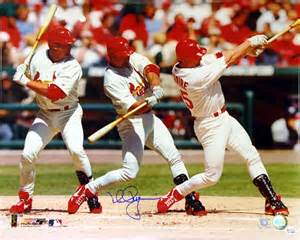
If the teaching – learning experience occurs in subsequent steps, sequential development is their natural consequence, and joyful expectation of progress eventuates in the ecstatic revelation that his/her patience has indeed paid off as the entire journey culminates in a “fun-filling” adventure.Boy swinging baseball bat 2Boy swinging baseball bat 1pony_baseball_6Albert Pujols 15

Coming Soon: Batting Your Way to a “Fun-filled” Baseball Experience.


A-Rod: Is it the End, or a New Beginning?

The scientifically minded “artist-of-the-bat” should understand and adhere strictly to the rules of his mental-physical application, and rest his performance on this sure foundation. He should hold his thought perpetually to the idea that his natural talent and indisputable scientific certainty can and will evoke from Principle the rule for mastering the most difficult task in all of sports.

A-Rod                      

 pac_2
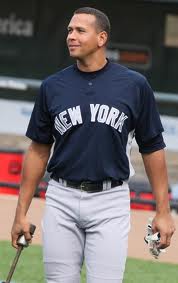
There was no better athlete in the game over the last two decades than Alex Rodriguez. He hit home runs with greater ease than any other player in the game (except Barry Bonds). But why is it that opposing managers and pitchers hardly ever gave him an intentional pass, even in critical game – situations?
It’s probably because they felt (or knew) that if they didn’t make a mistake they’d be more likely to get him out than they would Barry Bonds. A-Rod does one thing that Barry did not do, and this creates a “margin –for-error” that prevents him from being an even better hitter.
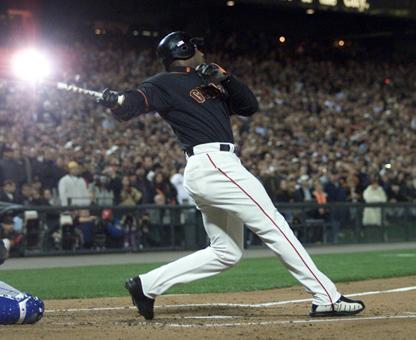
Barry’s front foot hardly lifted off the ground, and moved only slightly forward while keeping his head and eyes perfectly still in his low center of gravity. Barry had little difficulty in planting his front foot properly when it was time to attack the ball with the synergistic forces of the legs, hips, shoulders, arms, and hands. Very seldom could a pitcher catch him off balance enough to disintegrate his swing.Bonds -stanceBarry Bonds HR2001-10-05-bonds homerun-follow through
A-Rod is different. His stance begins balanced, low, and stable. But as the pitcher releases the ball, A-Rod starts an obtrusive attack with what I’m sure he thinks is a precision “timing mechanism” to incorporate a power surge. In fact, it does nothing less than unwittingly denigrate what is intended to initiate a “masterful stroke.” RodriguezAlex 1He lifts his front foot high off the ground while he waits in “suspended animation” to detect the speed, direction, and nuances being delivered by the pitch before he abruptly lunges forward and down to plant the foot to begin the swing. If the plant is too early, he’s out in front of the pitch and loses much of his power. If he is late with the plant, the fast ball is by him.
It is not uncommon to witness the devastating effect of the “later” situation in the form of a called third strike when the ball speeds by him and his foot hasn’t yet planted. In the “former” situation, the effect of being too far out in front is usually not so devastating because his uncommon strength in the shoulders, arms, and hands affords him enough “hang-time” to at least make contact and string out a base hit or better.
The point of this article is to concede that A-Rod is a tremendously hard working baseball player. Everyone who knows of him presumes he is trying to be the best that he can be. His workout ethic seems to imply that he would be a “perfectionist” (even with all the steroid allegations). Now, even as an elder statesman, and if he can overcome his current “morality and ethical issues,” he can still be a productive ball-player if he can extricate himself from thinking he needs his “high leg-kick.”

Has Matt Kemp Resurrected Himself?

“A good hitter is not merely one who makes solid contact with the ball. But rather, he is a batter whose body mechanics facilitate the action of the swinging bat to contact and continue through the ball at an angle that provides for a straight (non-hooking or slicing) and ascending line-drive. The ‘Art’ of hitting a baseball could certainly be defined in the context of describing the ideal hitter—‘He is one whose bat most consistently contacts and drives through the ball in a manner that facilitates a straight and ascending ‘line-drive.’(To hit the ball in any other manner would be to miss-hit it.)”Matt Kemp 14

The preceding paragraph is an excerpt from my Book, The Principle of Baseball, and All There is to Know about Hitting. I have written many essays on the “Art” and “Science” of hitting a baseball, many of which are included in my book, previously mentioned. The following is an excerpt from my essay, The Scientific-Artistry of Hitting a Baseball:

Is the act of hitting a baseball efficiently an Art or a Science, neither, or both? Those who demonstrate a high degree of talent in any of the various art forms could easily be described as artists.

There is adequate evidence to indicate that many or most good artists (of which Batters are included) have a ‘natural’ propensity toward the artisanship in which they are engaged. But their optimal level of proficiency is most often derived from the degree to which they accumulate enhanced understanding by means of scientific examination of all aspects of their chosen profession. Therefore, hitting a baseball most effectively would have to be construed as both an Art and a Science.

In professional Baseball, to be the best hitter you can be, you must apply science to your natural artistry or you will never achieve mastery over the elements that have superimposed a phenomenal limitation upon your highest expectations. Those outstanding physical athletes who make it to the ‘Show’, but eventually find themselves languishing  in mediocrity, are typically the very prospects who could become stellar bats-men if they would engage a scientific-examination conducive to complementing their artistic predisposition. And they, who are performing at the prevailing high standard of Major-League batting proficiency, could be setting new and higher criteria, if a more pronounced attentiveness to scientific inquiry were investigated for their optimal development.”

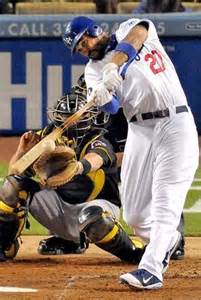
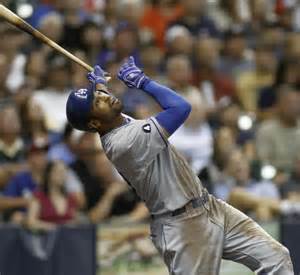
Matt Kemp has reached a point in his semi-illustrious career where intelligent pitchers have seen him enough to know his “margins for error” and can successfully circumvent his “natural-artistic” strong-points to wreak havoc on his phenomenal exhibition. Although he is still physically and mentally capable of demonstrating a sporadic prowess, he must now make certain adaptations that will enhance a more profitable enterprise. Matt Kemp 3Matt Kemp 16Matt Kemp 2Matt Kemp 1

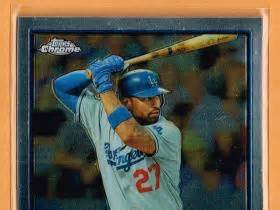
Prior to  his 2011 “banner-year” his somewhat high stance, and off-balance approach to the pitched ball (due largely to his tall stance and exaggerated “high-hands and bat”)garnered for him no high merits except that of enormous potential for his occasional display of power, and speed of foot.

Then, for some inexplicable reason, he lowered his stance to a surer foundation and refrained from taking a noticeable stride. The results of this simple change is what afforded him better balance, and a much better perspective and visual acuity for hitting the ball more consistently, and especially for refraining himself from swinging at the low, outside sliders that customarily struck him out. His only critical “margin for error” remained to be his high hands and bat, as well as the position of the front plant foot (especially now, since he had surgery on it).

Kemp Stance 7

When a batter, who has found success for moderate amount of time, and then suffers the effects of an unfathomable “slump,” he is most often at a loss for a rational explanation for that which he was subsequently experiencing. The most common reason is that the pitcher(s) has discerned in the batter’s technical mechanism a flaw that somehow precludes highest mechanical proficiency. Because he is not hitting as well as he did, and as well as he thinks he should, such batter will consciously or unconsciously make subtle changes that may end up merely exaccerbating his current situation while doing nothing to regain his former high status.

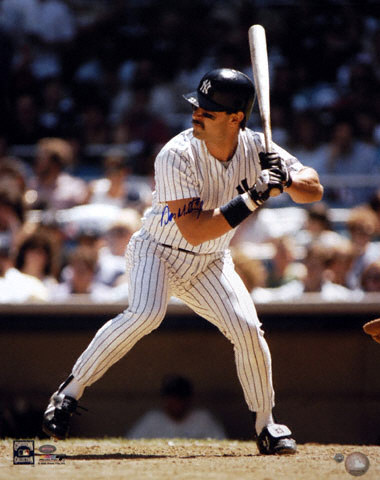
Matt Kemp had the good fortune of being under the tutelage of both Mark McGwire and Don Mattingly, and it may be for that reason that he had made somewhat of a come-back in the past year, and would have made greater strides had it not been for his untimely stints on the Disabled List.

Although he has lowered his stance, and tries to keep from striding, the two most debilitating aspects of his stance and approach to the pitched ball are his high hands and bat and his closed front foot Kemp Front Ankle.

don-mattingly 1Mark McGwire 3

Both Mattingly and McGwire maintained a low, powerful, well-balanced stance, but with their hands and bat just below the shoulders. In such a position there is hardly ever the temptation to swing at a pitch above the strike-zone, while being in perfect line to hit the high strike effectively.

In Kemp’s “high-bat” position, he was instinctively ready to pull downward to get to the strike zone, and would almost always miss the high strike by going under it. And later he had developed the uncommon tendency of swinging in a “Horse-Shoe” fashion (down-under-up).

Even when he made good contact with the ball, his bat had the tendency to roll onto the ball, producing a hard bouncing ball, or (even when he hit a home-run) a looping line-drive. Most often he either struck out or sent a towering fly-ball to the deepest part of the outfield. All this was due to his “high-hands and bat.”

Other ball-players (even on his team) who have had a high bat and were hitting somewhat effectively did so because they brought the bat to the “proper” hitting position as or before they would stride.

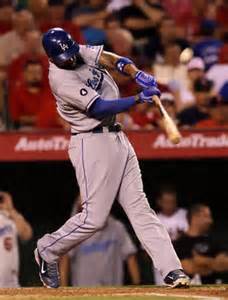
Hanley Ramirez 7Hanley+Ramirez 4Hanley Ramirez105

Although Hanley Ramirez has a few “margins for error” in his stance and stride, at least his approach to the ball gets the bat ready to make better direct contact. But, of course, with his high leg-kick, he is vulnerable to varying circumstances.

Now that Matt Kemp has established a low, well-balanced, and powerful-looking stance, and seems to have the intention of not striding, he needs only make 3 minor adjustments:

1. Lower his hands and bat to a legitimate starting position.  Matt Kemp 9

2. Point his front foot 120 degrees to the pitcher (Joe D’joe-dimaggio-s-legs-in-batting-stance-at-home-plateand Ted Williams)Ted Williams (feet in stance) and be balanced from beginning to end of swing, and without fear of dislocating knee and ankle.Ted Williams - swing

3. Just press down onto the front foot (without any stride or foot readjustment) as he is driving his back knee and hips forward (like Barry Bonds).

Barry Bonds 2

Upon being “born again” in 2011, I noticed that Matt refrained from striding, or moving his front foot. It was a far cry from his previous year.

In 2011 he seemed to have rid himself of his penchant for swinging recklessly at low, outside sliders. In his new, stable stance, he was able to see the ball most clearly because his head and eyes did not move with a stride. His approach to the ball was of MVP quality.

Then, his only foible was his high-hands and bat, but because he had everything else working for him, he didn’t suffer greatly. Now, I have noticed that although he maintains a low, stable stance, he has the tendency to “pull” his front foot slightly to the left. It is probably an unconscious effort to accommodate the “bad” position of the front foot pointing at home-plate, to allow him to open up faster to the inside pitch (but making him vulnerable to the outside pitch).

Whether he realizes it or not, every batter (Ryan Howard, Harold Baines, etc.) who points(ed) his foot toward home-plate (or farther back), and tries to apply pressure-power to the front leg, will inadvertently feel extreme strain to the ligaments and tendons of the ankle and knee joints. Most batters who make a practice of pointing the front foot to home-plate usually abruptly displace the front cleat from the ground as they  power through their swings.

In that ultra-closed position, it is impossible to maximize the hip-action without almost certainly dislocating the ankle or knee. The solution is simply to do what Joe DiMaggio, Ted Williams, and other great hitters have done, and are doing — point the front foot 120 degrees toward the pitcher. Matt might want to think seriously about that, after having had surgery on his left ankle.

I feel another COME-BACK on its way. I hope Matt and all Padre fans will see it together.

Matt Kemp batting stanceMatt Kemp 13Matt kemp 7

Proper Body-Mechanics for the “Efficient Thrower” of a Baseball.

Yaz-3Bonds -stanceSporting News MLB Baseball CollectionJoe Morgan1Mickey Mantle 1Albert Pujols 1don-mattingly 1Mark Mcgwire 4

In order to initiate the action of a swinging bat while hitting a baseball in a most proficient manner the batter’s body must first attain a position of optimal balance so that every movement in the commencement of the swing is fluid, fast , strong, and precise. The only way to secure that optimal point of strength and balance is for the batter to attain a low center of gravity, from which his maximum effort will not be denied. Thus the primary Principle for Batting is established!

The real beauty of Baseball is found in the highly “unobserved” fact that One-Principle is responsible for the ultimate grandeur for which the “love of the Game” is predicated, but highly unrecognized by the very populace that fosters its undying love. Batting, “throwing,” fielding, and running are the accouterments displayed at varying levels of accomplishment, but the highest standards of which are expressed only under the strict adherence to fundamental principle:

Bonds -stanceNolanRyan 13Fielding 2rickey-henderson 6


The “Efficient Thrower,” whether he be a pitcher, or a fielder, can maximize his efforts only as he initiates the action of his throw from a position of balance that is the focus of a low center of gravity.Yadier 1Nolan Ryan 2 Ichiro 1Furcal 10Masahiro+Tanaka 16


The maximum effort in any throw can only occur if the thrower’s knees are bent to a point that provides the optimum leverage from which a low center-of-gravity can speedily move the entire body forward and turn the twisting, torquing  hips and torso to a frontal position that initiates the action of the shoulder and bent throwing arm to elicit the continued motion that provides velocity and power to the thrown ball. verlander3200px-Nolan_Ryan_17Masahiro-Tanaka 3TANAKA 31Tanaka 20Billy_wagner 9

It surprises me that some throwing instructors who have a good understanding of Throwing/Pitching mechanics do not fully recognize that ultimate power for the throwing mechanism comes from a “low-center-of-gravity,” provided by bent legs.

Movement initiated from “straight-legs” and a “high-center-of-gravity” are always slow in comparison to bent-knees. Just think of 2 individuals of equal size and strength, each holding a 100 lb. bar-bell on the back of his shoulders, and trying to simulate the twisting-turning motion of a “batter,” with his legs, hips, and torso. One is in a “straight-leg” stance (upright), while the other is in a “bent-knee” stance.

Can you imagine which of the two would be more efficient in his movements? Which would be quicker, stronger, and less apt to injure himself? Or, can you imagine two basketball players performing a side-ways, defensive -“shuffle-drill”? One is moving with straight, stiff legs, while the other has bent knees and is lower to the ground. Which one would be more efficient?

Every movement that occurs in Baseball that is initiated from a “low center-of-gravity” has the potential to attain “Maximum Effort and Efficiency”! But, of course, all subsequent action following that strong fundamental basis must be in sync with the continuum of correct mechanical functionality – “You are only as strong as your weakest link”!

Coming Soon: The Art and Science of Throwing a Baseball. Or, Matt Kemp – Padres!

Things to Remember in applying the Principle of Batting Perfection:

Reduce Margins  for Error Baseball_Strike_Out 5Strike-out 3strike-out


In all walks of Life, from a professional baseball player to a rock musician, from parenting to managing a business, a respectable accomplishment can be ultimately attained only after the process of trial and error has been satisfactorily consummated with a high-quality finished product. Until that has happened, one can assume that, in all of these life-challenges, the margins for error that seem to be natural retardants to proper development have not been reduced sufficiently to produce a genuinely finished product.

A legitimate “prospect” for becoming a proficient baseball player eventually must master all the intricate details for hitting (and throwing) a baseball effectively. He will never make it “Big” until his concept of “hitting” (or throwing) complies with the principle that is the most probable means for facilitating optimal proficiency.  The principle of Batting (and Throwing) is the scientific application of body-mechanics, based on the understanding of factors that influence the effect that the bat has on a “pitched” ball (and the effect that body, arm, hand, and fingers have on the ball thrown).

As most ardent sports enthusiasts already know “hitting a baseball effectively is the single-most difficult act to perform in all of Sports.” Why? No other individual sport-skill encompasses the variety of challenging variables that a batter has to “put in order” to be a proficient “hitter.”

Along with physical attributes of strength, flexibility, quickness, balance, and coordination, as well as the mental accoutrements of courage, confidence, determination, and fortitude, the proficient bats-man must ascribe to a technique of proper mechanics that facilitates the most probable means for making solid contact with a pitched baseball in what is considered an acceptable proportion of his “at-bats.”

In professional baseball, batting averages ranging from .300 to .399 are considered high quality hitting, with an annotation of “superlative” attached to those that exceed the .350 mark or flaunt with the barrier of .400. But most ball-players fall far short of consistent .300 – hitting prowess.

Natural athletic ability does not seem preponderant in determining batting proficiency at the highest level. All batters seem to have their own individualistic style for expressing their highest hopes of masterful bats-man-ship.

There does not seem to be a standard approach (“techne”) that would be considered fundamental to the purpose of maximum efficiency in hitting a baseball. Some players stand tall; others crouch low. Some hold their hands and bat high, while others hold them low.

Players address the “plate” in either an open, closed, or even stance. Most batters take a stride, either away, toward the plate, or toward the ball (or practice a “high leg-kick”). They tend to push off the back foot while straightening the back leg as the weight of the body is either trying to stay back or lunge forward.

Some hitters think that maintaining even shoulders while swinging will facilitate a “level swing” for effective line-drive contact. Others perceive that by swinging downward onto the front part of the ball, the bat will effect a “back-spin” on the ball that will allow it to carry through the air longer and farther. Some batters cock their wrists back for extra power, and consider themselves “wrist-hitters” when they exhibit fast hands while rolling the bat through the ball quickly. Some batters maintain loose hands and wrists while they are swinging so that relaxed muscles will propel the bat more quickly through the strike zone. And still others (like Babe Ruth) squeeze the bat tightly, from start to finish, and rely on the speed and strength of the turning body to impact the bat onto the ball with a force to counteract the speed and power of the pitch.

From the contents of the preceding paragraph, is it possible to delineate the characteristics that might lead to the creation of what could be considered the quintessential professional bats-man? The answer is NO!

The pronounced characteristics mentioned in the foregoing illustration enumerate the “margins of error” that exacerbate the promising intentions of all prominent prospects for batting excellence:

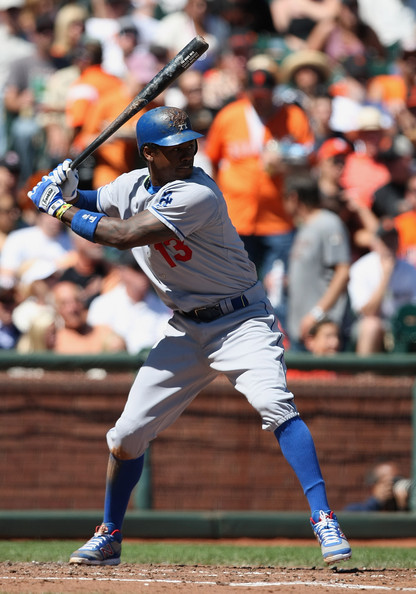
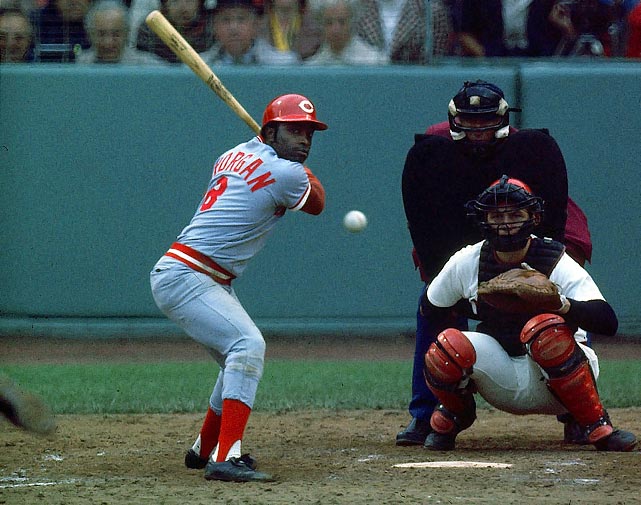
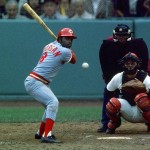
  1. A “Tall” stance Chris Davis (Stance)creates a large and easy strike zone for the pitcher, as well as proposes a line of vision for the batter’s eyes that transcends countless horizontal planes in following the flight of the ball to the plateyasiel Puig 1. The eyes that will see the pitched ball most clearly are those that come as closely as possible to the level of the ball in flightJoe Morgan1. Also, the taller the stance, the higher the center-of-gravity, the weaker and slower the body’s action, the lesser the prospect for a most effective swing.
  2. When the batter’s hands and bat are held highMatt Kemp 16, he unwittingly has created for himself a high center-of-gravity, which for all practical purposes diminishes the leverage by which the maximum speed of the body can be facilitated in turning the hips and shoulders. A low stance, with bat and hands at the level of highest strike, facilitate the fastest body action(Joe Morgan – above).
  3. Of the three stances, the open-stance is the most deleterious to proficient batting Shawn Green 3because it tends to force the batter to stride toward the plate and therefore makes him vulnerable to hard inside pitches. Because the stride itself is moving the body, along with head and eyes, the movement toward the plate compounds the distortion aspect of the moving pitch.
  4. Any stride at all is a major contributor to batting dysfunction. It is useless expenditure of energy whose purported function of initiating momentum is overrated.Bryce harper2 It becomes counterproductive to optimal visual acuity, as the head and eyes move also. If the hips move forward with the stride, the integrity of the swing itself is compromised by the dislocation of the body’s “vertical axis.” Maximum power is impossible to generate while the vertical axis is not constant. The “high-leg-kick”RodriguezAlex 1 is a detriment to effective hitting because the batter never knows exactly when to put that “plant-foot” down, especially on off-speed pitches.
  5. Pushing off the back foot while striding gives the false impression of producing power to initiate the turn of the hips during the swing. Strike-out 3In fact, the push-off impels the back leg to continue to straighten, the effect from which restricts the turning of the hips to their maximum. The optimum hip and shoulder actions occur only when the back bent knee maintains its same bent position as it rotates through the entire hip rotation. (ala Barry Bonds)Barry Bonds 11
  6. The stride and the push-off may force the body to “lunge forward” to try to counteract the “magnetic pull” of the in-coming fastball. However, off-speed pitches will force the batter to hesitate by gliding forward on a bent front kneepony_baseball_1, affording no balance, nor power to swing because of the disintegration of the vertical axis, and premature turning of the hips. The hips should always be ready to turn quickly in a “turnstile” fashion, both sides in opposite directions, on the same horizontal plane, with the vertical axis intact.Barry Bonds 9Ted Williams' follow through
  7. Parallel shoulders, while striving for a level swing, is a misconception of the ideal of good intent. If the shoulders stay level throughout the swing, at the presumed contact point the top hand will be forced to roll over the ball because the hips and shoulders have reached the limits for forward movement, and the arms will extend to keep the momentum. However, if the front shoulder is in a “shrugged” up-position, and the back shoulder lowered with a driving back elbowBarry Bonds 2, the bat and ball will meet as the palm of the top-hand is facing upwardBarry Bonds 4. The horizontal rotation of the hips and bent back knee preclude any possibility of an upper-cut swing, as long as the front upper arm is in contact with the chest.
  8. Swinging downward onto a downward moving pitched-ball is more often counterproductive to efficient bats-man-ship than it is productive. The pitcher is on a mound almost a foot above the plane that the batter is onbaseball_flight. Every pitch is moving downward into the strike zone. If a batter with good eyesight and good coordination strikes downward onto the pitched ball, his athletic ability will probably enact solid contact a high percentage of times. Solid contact in those instances will result in balls hit on the ground. (Albert Pujols and Gary Sheffield are examples of such a hitter.) The “best of hitters” is not merely one who makes solid contact with the ball. But rather, he is a batter whose body mechanics facilitate the action of the swinging bat to contact and continue through the ball at an angle that provides for a straight (non-hooking or slicing) and ascending “line-drive.” The “Art” of hitting a baseball could certainly be defined in the context of describing the ideal hitter– “He is one whose bat most consistently contacts and drives through the ball in a manner that facilitates a straight and ascending “line-drive.”Barry Bonds HRBarry Bonds 21 (To hit the ball in any other manner would be to miss-hit it.)
  9. “Cocked-wrists” may deceive the batter into thinking he will have a stronger swing because of the extra action he expects to have at the “contact–point.” The extra action is counterproductive because the timing mechanism to produce a synergistic display is unreliable at best. Also, neither “cocked forward” nor “cocked backward” is the strongest position for the wrists to be in. Straight and stiff is the strong position of hands and wrists for swinging a bat, as it is for a Karate punch. What would happen if you punched a “bag” with wrist and hand cocked in either the forward of backward position? Right! Remember, the power of the swing comes from the body. But if the hands are not in their strongest position on the bat at contact, the ball will impact the bat more effectively than the bat will impact the ball; and the pitcher will win that battle.
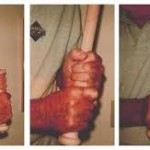
  10. Relaxed hands to begin and tight hands to finish through the “contact point” is a good rule to follow. With continued “loose-hands” through the “contact,” the ball controls the bat. But if a tight grip occurs at “contact,” the ball will sound and feel like a golf- ball. The bat should be gripped with the strongest part of the hand, not in the fingers.Ted Williams' grip
  11. In the preceding photo you will notice not only that Ted Williams’ is gripping the bat with the strong part of the hands, but also, as his custom was, he “choked-up” on the bat, not holding it on or below the knob. Most hitters, especially those who strike out a lot, usually have their hands on or below the “knob” of the bat. They generally think that that extra “leverage” will allow them to hit the ball farther. But those great hitters who seldom struck out, and are also known for their propensity to hit many Home-Runs, were much more scientific in their approaches to hitting: Joe Morgan 2Joe Morgan, ted_williams_ bat routeTed Williams, barry_bonds_1992_piratesBarry Bonds,don-mattingly 1Don Mattingly, to mention a few. They understood that it was not so much the length of the bat, but rather the control and power that the body gave the bat that propelled the ball the distances necessary to display the ultimate swing. When a batter (whose hands are below the knob) just misses “his pitch” by fouling it straight back (especially when the pitch is slightly away – where he can extend his arms), he doesn’t understand that the extra length adds weight to the extended shoulders, and the extended bat dips slightly under where he thought he was swinging. On that same kind of pitch, the batter (Barry, Joe, Ted, or Donny) would more often make solid contact because they were better able to compensate the extension of their shoulders and arms – less weight.
  12.  Most people might surmise that the surface muscles of the upper portion of the arm and shoulder juncture come into play when getting the front arm ready to enact its movement in swinging a baseball bat. The “deltoid” muscle, as it is known, contracts to lift the upper arm away from the body as it prepares for the swing. But if the deltoid muscle alone is thought to be the stabilizing mechanism to begin the arm involvement of the swing, the strength necessary for the number of intricate functions is drastically reduced. Therefore, I assert that a driving force of parallel shoulders, to bring the arms and bat to the ball, is not what is essential. A more correct elaboration of the action of the upper body would be to insist that all the muscles of the “shoulder-girdle” (including the trapezius, supra-spinatus, etc.) contract to lift the entire front shoulder, while stabilizing the arm socket. This provides not only a stable reference point from which to begin the twist-turn of the swing, but is also the initiating agent for flattening the bat as it is to begin its approach to the ball. With these large muscles in complete control of the upper arm, the facilitation of proper arm-action for the swing is now set in order. The arm-socket is locked into position. Now, the turning thrust of the entire body provides a powerful centrifugal force which disperses its energy through the connection of a tightly bound shoulder joint, through the extending front arm, to the viselike grip of the stiff wrist-hand-fingers. In conjunction with the action of the front side of the upper-body, is the coordinated action of the backside. When the front shoulder “shrugs” upwardly, it automatically creates an opposite reaction for the back shoulder and corresponding arm, elbow, and “top” hand. The back shoulder pulls downward, bringing the back bent-elbow to a low vertical position, and changing the position of the top hand to one above and even with the back elbow, with the bat flattening in its approach to the ball thBarry Bonds 2Barry Bonds 4Barry Bonds HR. As the body reaches the point of full expression of power (the legs, hips, and shoulders having brought the arms and bat into the “range of decision”) the batter has to decide whether to complete the mission (attack the ball), or quickly abort (hold up). If the pitch is a strike, then a full commitment is in order, and the front forearm extends through a locking elbow (whose upper arm is just releasing from the chest, to extend away from the body), assisted by way of the driving force of the extending back arm. If the shoulders continue in the “follow-through” in a manner which allows for the front shoulder to end up in back, and vice versa, and the bat goes through the ball with the top-hand in a “palm-up” position, then the batter can assume an optimum effectiveness in the swing. If the pitch is not a strike, all the momentum built up by the powerfully turning body would have to come to an abrupt halt. Fortunately, if the batter’s preliminary front shoulder preparation was correctly applied, the large muscles of the “shrug” will supply adequate force to stop the arms from committing the bat too far over the plate, and prevent an inadvertent strike-call. It would be virtually impossible to stop such a powerful force of momentum with just the strength of arms alone, or the wrists and hands. pony_baseball_6(You can always tell a batter who does not understand the value of the “Shrug” by the frequency with which he cannot hold up on a “close-pitch.”)The “Shrug” is definitely the least exposed secret in the “Science of Hitting.” Most players would deny its validity on the mistaken grounds of two illegitimate hypotheses. First, that the shoulders are supposed to remain parallel throughout the swing to assure a “level-swing.” Secondly, that an upward tilt of the front shoulder would automatically include a high risk of the batter’s “popping-up.” The truth to both of those matters is that the “shrug” is beneficial to maintaining a level swing as well as in preventing a high frequency of “pop-ups.” Parallel shoulders, throughout the swing, prevent the top hand from completing the process of palmation, thus forcing a premature rolling of the wrists over the descending ball, in a majority of swings (e.g. Eric Karros). While the shrug helps to level the bat to the plane of the ball, the turning body and extending arms supply the power and direct guidance along the same line as the descending ball. Also, more pop-ups occur when a bat is swung on a downward angle at a downward moving ball. That is unless the ball is hit squarely, which, of course, would result in a ground ball, most other times!Most of the great Power-Hitters of Today and Yesteryears, especially Home-Run hitters, used the “Shrug” in their applications to the swinging of the baseball bat. All you have to do is watch films of the great hitters like Willie(s) Mays and McCovey, Hank Aaron, Mickey Mantle, Babe Ruth, Roger Maris, Mark McGwire, Barry Bonds, Albert Pujols, Ken Griffey Jr., Sammy Sosa, and Ted Williams, just to name a few. And if you look closely at the initial move of the upper body, as the swing begins, you will notice the tilt of the shoulders, either consciously or unconsciously, created by the “Rodney Dangerfield” of the Perfect-Baseball-Swing—“The Shrug.”Mark McGwire 3Barry Bonds 21Barry&TedChris Davis 4C.Davis 7AlbertPujolsLOWER_HALF_DRIVE_HIPSHanley Ramirez105Matt Kemp 10Mark McGwire 6


The “Premier Batting Principle” is based on the perfect application and integration of all the preceding components!

* The proper body-mechanics for throwing (Pitching) is described in another essay, COMING SOON!

Correct Batting Technique!?

Joe Morgan1Mickey Mantle 1Albert Pujols 1joe-dimaggio-s-legs-in-batting-stance-at-home-plateTedWilliamsShortSwing2Barry Bonds HRhankaaron 1

Many will argue, “Is there only one correct way for a batter to hit a baseball”? And the correct answer depends upon what any individual hopes to accomplish in the baseball setting that he finds himself. A Little-Leaguer who is playing in his first organized game, and is not yet accustomed to the tormenting threat of being hit by a pitch(mean baseball face)might at first exude a confidence that he normally has when “dad” is softly lobbing the ball into that part of the strike zone Baseball - Jesuswhere his natural body mechanics allows his arms and hands to synergize the coordinates of his swinging bat to contact the ball with remarkable proficiency and redirect the pitched ball on the ground, or in the air, in the opposite direction.

As an aspiring player matures he recognizes that the effect of his mechanical effort to strike the ball in a manner that provides him the “most” satisfaction might be different from otherspony_baseball_6Boy swinging baseball bat 2Boy swinging baseball bat 1. Every person who picks up a bat, to hit a baseball, wants to hit a “Home-Run” (over the fence), or at least a solidly contacted ascending line-drive that could split the outfielders and allow his speed to garner a double, triple, or an “inside-the-parker.”

Many “little-kids” dream of hitting home-runsCoaching10, but their reality usually has them settling for merely making contact with the pitched ball, and hoping that a grounder through the infield will get them a base-hit. Their instincts tell them that only “big-guys” can hit the ball over the fence for Home-Runs. Joe Morgan 2Until they learn that proper mechanics is the requirement for hitting a baseball correctly, they are doomed to languish in the realm of mediocrity or below. In the early years of a baseball experience, it seems obvious that the “big-guy” is the one to count on for the big home-runs. But as a growing experience mounts, it is perceived by an astute observer that “form” and “technique” play essential roles in developing into a proficient bats-manModel Barry Bonds 1. And, what better way for a youngster to find the right form or technique than to copy the batting stance and swing of his favorite Major League Player?

When we were kids, my brother and I would play a game we called “Strike-Out.” Sometimes we included a few neighborhood kids, but most often it was simply him against me. We would find an area on a public tennis court, or an isolated section of an opened grass or dirt area. We’d mark off the parameters of boundaries for fair or foul balls, and designate the distances for what would be a single, double, triple, and home-run.

After a “choose-up” with alternating hands clasping the continuum of the lesser end of the bat, then either of us would win the right to be the visitor or home team. It was a game of Pitcher vs Batter, usually using a tennis ball. (If the playing area was limited, we’d use a whiffle-ball.)

The Pitcher and Batter would be more close to each other than normally, the emphases being to strike out the batter, or make him work especially hard to hit the ball solidly while testing the quickness of his reflexes. The game carried on for 9 or more innings.

The catcher-umpire was a marked off area on the fence or wall behind the batter, to designate strikes and balls. Each of us would make a list of our favorite batters (right or left-handed) and assemble a 9-batter line-up, while making an effort to mimic their stances and batting styles.

Sometimes we’d have the same players representing each of our teams. We both like Ted WilliamsTed Williams - swing, Stan Musial, Babe RuthBabe Ruth 3, Jimmy Fox, Mickey MantleMickey Mantle 2, Yogi Berra, Joe DiMaggio, Lou Gerrig, Al Kaline, Dick McCaullif, Norm Cash, Rocky Collivito, Willy Mays, Hank Aaron, Duke Snider, and others.

It was fun, and provided our initial means to figuring out which batters’ techniques best suited our own particular physical attributes for batting a ball efficiently.

Did any, or all, of the players on that list of hitters practice what would be considered the correct batting mechanics? We didn’t know, but we had fun copying their styles, and hoping to our diligence would advance us to inevitable “stardom.”

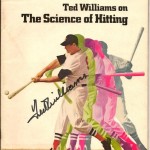
“Hitting a baseball is the hardest thing to do in all of sports,” was a statement made by Mr. Ted Williams. And, from the list of the players above, he was probably the Game’s most astute practitioner of correct body mechanics for Batting. His scientific inquiry into whatsi_ted-williams-science-2 constituted a precise manner for which to hit a baseball most efficiently was revolutionary for his time. But, in the aftermath of his great and successful career, he attained many ardent followers, But few were able to understand and duplicate his relevant and practical theories, and their applications.

In this “ultra-modern” era of Baseball, the players are bigger and stronger; the pitchers consistently throw harder than their predecessors and the batters are capable of consistently hitting the ball farther than ever before. With the advent of so many multiples of “off-speed” pitches to complement their blazing fast-balls, pitchers who are closer to flawless mechanics seem to be able to dominate most (if not all) batters that they face.bryce-harper1 The “Premier Pitching Principle” leaves most modern batters at a loss for productive bats-man-ship. But what the “modern batsmen” fail to realize is that there is a Principle for Batting that would supersede the predominance that the “modern pitcher” seems to have acquired.Chris Davis (Stance)Albert Pujols 8RodriguezAlex 1Bo Jackson 2

The missing link in applying the hitting principle has always been the inconsistent visual acuity of the batter in accurately detecting the speed of the fast-ball, as well as the direction and varying speeds of “breaking” and other off-speed pitches. All this, of course, was due to excessive movement of the head, the primary culprits being the high stance and batter’s stride (or high leg-kick). Although the pitcher’s arsenal of distracting and illusory forces will always wreak their havoc on unsuspecting “head-gliders,” the Einsteins of a new era of batting prominence would set the standard for proficient hitting elegance.

Hitting a baseball is the most difficult task to perform in all of sports.” That’s what Ted Williams once said about “batting,” the claim about which has been verified by the many expert athletes who have tested the veracity of such an arguable statement.michael-jordan 3 Then why would someone (like myself) have the audacity to declare that “Batting-Efficiency is a Simple Process”?

IF ITS SCIENCE IS UNDERSTOOD!

Most astute baseball observers recognize that “batting a baseball” proficiently can be esteemed as an artistic display of uncommon physical prowess. Those who demonstrate a high degree of talent in any of the various art forms could easily be described as “artists.”

There is adequate evidence to indicate that many or most good artists (of which Baseball’s Bats-men are included) have a “natural” propensity toward the artisanship in which they are engaged. But their optimal level of proficiency is most often derived from the degree to which they accumulate enhanced understanding by means of scientific examination of all aspects of their chosen profession.

Therefore, hitting a baseball most effectively would have to elicit from the batter’s technique a scientific componentBarry&Ted to complement his otherwise unfulfilled artistic talent. Thus the process is simple and the results are sure if the Science is understood. BUT!

WHAT IS THE ESSENCE OF SIMPLICITY?

Einstein made E=MC2 look like a simple formula that would enlighten an ignorant, chaotic world as to the heightened prospect of infinite possibility. But that simple acronymic equation involves a seemingly endless continuum of sequential deliberation to effectuate a profitable facsimile thereof.

Simplicity is the integration and coordination of life’s infinite array of variables brought within the control of understanding. Simplicity is not the beginning of primitive evolvement, but rather the end result of organization. When chaos is changed into order, the universe (one voice) sings in simple chords of harmonious function.

The only way to describe the best of batters is that “he makes it look simple.” Look at how Barry Bonds and Ted Williams approached “Hitting”! Although it is not really simple, abiding by a strict discipline of simple mechanics, they had perfected their technique(s) through arduous, repetitive labor, from which the human physical endeavor appeared effortless and instinctive.

The three major components in effecting the proper technique for batting a baseball are these: balance, vision, and power. As the pitcher throws the ball, the batter’s strong balanced position allows his eyes to focus on the point where the ball is being released.

Preliminary movement implies that his body is “gathering” itself to brace for any number of possible conditions. The body maintains a low center of gravity to ensure stability, while shifting its weight slightly inward (not back) to initiate a quick twisting response to the ball as it presumably enters the “zone.”

The quick twisting response is effected by a rapid sequence of fluid rotary movements simultaneously by the entire turning body, beneath the stationary head. If balance and focus are maintained from start to finish, the power and effectiveness will be evident in the beauty of the “follow-through.”

A batter establishes stability and balance to perform his task when his center of gravity is low. His ability to see the ball most clearly is determined by the extent to which his eyes are on a parallel level to the ball, and the degree to which the body and head maintain a stable vehicle for proper focus.

Power is generated most effectively with the body in a stable, balanced position, from which all movements can be produced most speedily, and with a minimum strain to accompanying body parts. The centripetal force provided by the stable position of the vertical axis produces the powerful centrifugal force, which magnifies the power elicited by the turning hips and shoulders.

The rules are simple and orderly. To abide by them and commit them to proper interpretation are what seem to be difficult, especially to those who prefer to act on their own fallible human instincts instead of a sound basic principle.

A prominent 19th century philosopher makes this statement for our consideration, “The higher false knowledge builds on the basis of evidence obtained from the physical senses, the more confusion ensues and the more certain is the downfall of its structure.” Therefore, make it SIMPLE—by letting Principle speak for itself! The scientifically minded “artist-of-the-bat” should understand and adhere strictly to the rules of his mental-physical application, and rest his performance on this sure foundation. He should hold his thought perpetually to the idea that his natural talent and indisputable scientific certainty can and will evoke from Principle the rule for mastering the most difficult task in all of sports.

Coming Soon: Important things to remember in applying the Principle for Correctly Hitting a Baseball.


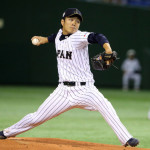
Japanese Pitching: Will It Continue to Dominate MLB Batters?


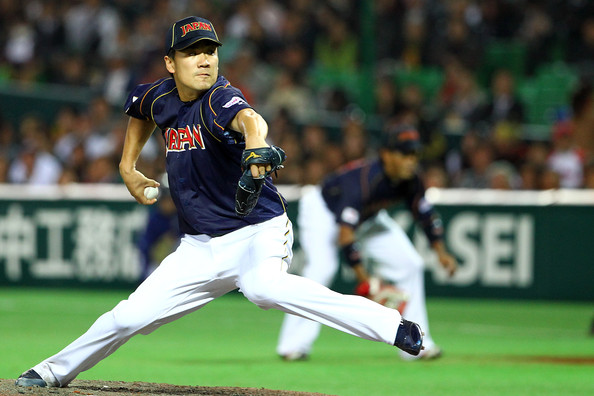
I was not privy to observing all of the games, nor all the Japanese pitchers who applied their skills in the dominance of the Major-League batters during the Japanese Baseball Series. But what I was able to perceive during a few of the games was the masterful body-mechanics with which the Samurai “Mounds-men” displayed ultra-functional speed and control to over-power and confuse their opponents with pitches of intense velocity, uncanny control, and proficient variations of speed and subtle directional deviations from a straight line.

The U.S. Team, most batters of which held their bats high, stood tall, and practiced a lengthy stride or high leg kick, had very little chance of adjusting to the multiples of off-speed pitches and blazing fast-balls of the Samurai “warriors.” Occasionally a “powerfully built” MLB player would hit a Home-Run while correctly guessing fast-ball, but the astute Japanese pitchers would not usually make the same mistake twice.

The batting mechanics of the Japanese players were not any better than the MLB players, but the Samurai mental attitude and approach to hitting were obviously more productive than were those of the U.S. Although the flaws in each team’s batting mechanics were similar, the aggressive Japanese approach was more rational.

Since most pitchers are anxious to begin with a first-pitch strike, a fastball is normally the order of the at-bat. And of course, most MLB batters portend to apply the “Mike Trout” approach to hitting by taking one or two fast-ball strikes (right down the middle), then, against mediocre pitching, resign themselves to being good 2-strike hitters (hopefully). Meanwhile, the smaller and seemingly less-powerful Japanese hitters were “jumping” all over every first fast-ball strike (any strike) they saw, and blasting it for extra-bases.

All things being relatively equal in the department of “Batting Mechanics,” the Japanese had proven themselves to be superior in the realms of “smart-hitting-approach.” Although both teams were similar in the area of Pitching Mechanics, the Japanese were closer to “flawless” technique.

Americanized Baseball players are reluctant to become exact replicas of a previously established super-star, because they prefer to establish their own unique and distinguished style of batting or pitching “technique.” Otherwise every batter would or should copy the batting technique of Barry Bonds. (I haven’t seen another BARRY.)

But look at the Japanese! Almost every one of their batters is still trying the replicate the batting style of their ancient hero, Sadaharu Oh. But even Sadaharu’s high leg-kick wouldn’t do well against the master-pitching technicians of the modern era, especially in his native land.

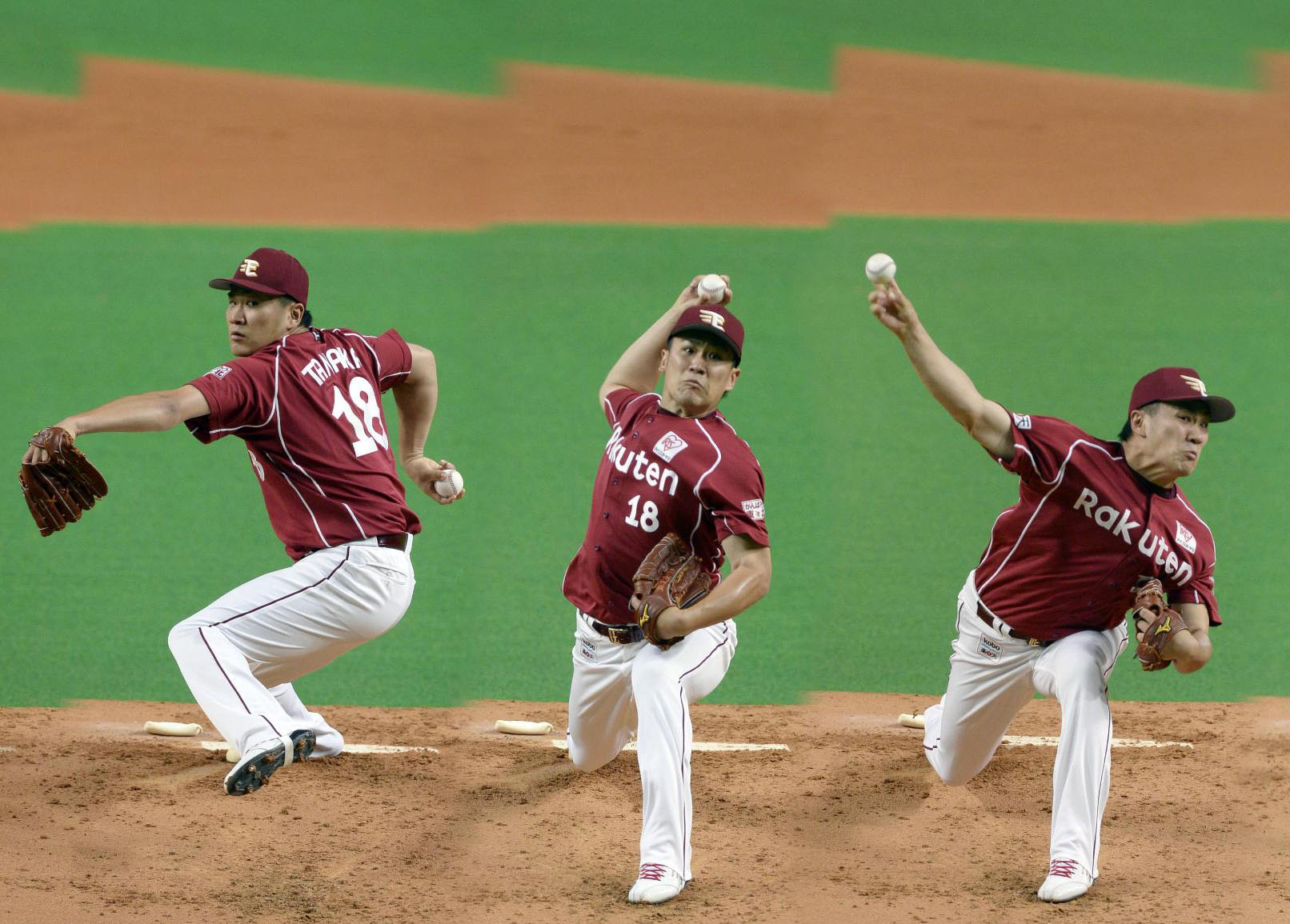
And look at all these young pitchers, especially Norimoto! Even their left-handers have the same anatomically and physiologically correct body-mechanics and arm-motion as Masahiro Tanaka.Japan v Australia - WBC 2013 FriendlyMasahiro+Tanaka 16Norimoto1 Whoever it is that is perpetuating the imperfect batting-mechanics of the distant past should start thinking “outside the box,” like whoever it is/was that was the vanguard for the innovative thinking that produced the likes of Masahiro Tanaka, Takahiro Norimoto, and others who have become the new standard for Pitching Excellence. (Maybe some fortunate Japanese pitching aspirant wandered into the instructional Pitching Camp of Resident Arizona Pitching Guru, Dick Mills, and learned a few things about Pitching Conditioning and Mechanics!)

Coming Next: Breakdowns of Correct Batting and Throwing Mechanics.

Reminder of Kirk Gibson’s World Series Heroics – Oct. 15, 1988

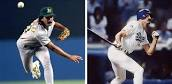
 dennis eckersley

When classifying the “Greatest Home-Runs” in Baseball history, the closest that Kirk Gibson’s 1988 World Series “Bomb” ranks to the top of the analysts’ charts, even by MLB Productions, is 2nd or 3rd, behind Bill Mazeroski’s 1960 “Walk-off,” and/or Bobby Thompson’s 1951 “Shot Heard Round the World,” that gave the Giants the pennant.

Of course the main criteria for evaluating these enduring historical footnotes are still the reminiscence of “that” notorious City-Team rivalry and a purely “Under-Dog” sentimentality (Giants’ 15 games deficit before tying the Dodgers, then winning the pennant; and Pirates’ monstrous negative run differential with the overwhelmingly favorite Yankees).

Now, if that criterion cannot be upgraded eventually by Time and Logistics, then a new category must be conceived in order to pay proper respect for what Kirk Gibson did in 1988 when single-handedly, but surreptitiously, leading the Dodgers to the World Series Title. (Space in this category would also have to be reserved for NFL Football’s 1972 “Immaculate- Reception,” which would probably rank 2nd as the “penultimate” contributor to those “Amazing” performances.)

In order to hit a single home run, so many aspects of a batter’s swing must be aligned to satisfy the anatomical, physiological, and psychological constituencies composing each player, as afforded haphazardly by the “gods of Baseball.” Most athletes, professional and amateur alike, who have legitimately tasted both the “thrill and agony” of most majors sports activities will usually attest to the validity of Ted Williams’ famous yet arguable statement that, “hitting a baseball is the single-most difficult skill to master in all of Sports.”

In an essay I wrote entitled, “Einstein and the Home-Run Principle,” Einstein supersedes the Williams’ statement when he parenthetically observes, “Hitting a Home-run is the most difficult thing to do in all of Sports.” To hit a home run, a batter has to be almost perfect in his application of the “the laws of physics” with regard to the mechanics of swinging a baseball bat with precision and power.

To be a consistent home-run hitter the batter must also have an understanding of all the elements that are included in the dynamics of hitting a baseball effectively. Theoretically, it is possible to hit a home run every time a batter swings at a baseball. However, Einstein and others have found through Quantum Mechanics, when trying to establish the essence of matter, that “at the fundamental levels, causation is a matter of statistical probabilities, not certainties.”

Therefore, with all the elements and combinations of variables with which a batter has to deal, from within and from without himself, the “uncertainty principle” gives compelling testimony that mastering the “rubik’s cube” of hitting a home-run every time is highly improbable. However, the knowledge itself, of such feasibility, enhances the statistical probability of success.

Not even Albert Einstein and all the renowned physicists of his time, and “saber-metricians” of this modern-era, could have approximated the statistical improbability of what Gibson did on October 15, 1988. The resounding joy that New Yorkers experienced in 1951 and preserved for decades was not altogether incalculable, since Bobby Thompson had not more than 3 days earlier lit up Ralph Branca with a Home Run that presented as an ominous note a precursor of what was to come.

And Bill Mazeroski’s feat that ended the 1960 World Series, although dramatic, cannot have been totally unexpected. Pinch hitter, Hal Smith, had earlier hit a 3-run homer to stake the Pirates to a 2-run lead until the Yankees tied the game in the top of the ninth, thus extending the heart-pounding “see-saw” battle.

“Maz” was 1 for 3 as he led off the bottom of the ninth. Yankee pitcher, Ralph Terry, made the huge mistake of getting the pitch up to the short but powerfully built Pirate second base-man, who took advantage and slugged the ball over the brick wall 408 feet from Home Plate. It was truly a magnificent and endearing moment for the Pittsburgh community and all Baseball fans outside of the Bronx – worthy indeed of memorial status.

All that being said, encomiums to those two distinct episodes in Baseball lore should pale in comparison to the near “mythical” grandeur that highlighted the glorified instant of Gibson’s exalted “blast,” as well as propagated the ecstatic drama that preceded his culminating heroics. Kirk’s advent into professional baseball is as mysterious as that of the legendary “Roy Hobbs,” without the tragic prelude.

Upon completing a successful College football career, it was suggested that he not waste his athletic talent in the “off-season” and play “a little” baseball for his Spartan baseball team at Michigan State University. In that first and only year of College baseball, he played so well (.390 B.A., 16 HRs. 52 RBI. in 48 games) as to warrant being picked in the first round of the 1978 MLB Draft by the Detroit Tigers.

He was with the Tigers for 9 years, and was a key figure in attaining a World Series title in 1984. After being determined as one of the ballplayers being “black-balled” by MLB Franchises in the notorious “Collusion Scandal” of 1987, he left the A.L. Tigers and in January  joined the Hapless Dodgers of the National League, whose dismal ‘87 season needed something of a “Hobbsian” spark to generate new life into a ball-club in disarray.

At Spring Training a few opportunities presented themselves early in Camp to set the stage for an immediate change of direction in Team attitude and focus. That would eventually lead the march to a much improved status and uncontested standing in the National League West to win the Division by 7 games.

Frivolity and practical jokes took a back seat to Kirk’s ultra-professional and business-like mentality, and the team flourished from beginning ‘till the season ended. His season ending stats earned him National League MVP honors while helping the Dodgers win 21 more games than the season before.

But it was his uncommon “personal-leadership” and otherwise intangible, undaunted presence that invoked the “mythical hero” image his teammates and adversaries had learned to admire and would attempt to emulate. In the NLCS, although injured, Kirk still performed heroically in clutch situations. His timely home runs in the 4th and 5th games clinched the National League Pennant, and advanced the Dodgers into an improbable World Series entitlement.

Kirk purportedly had done all he could to get the Dodgers to that World Series. “They” were presumably going to have to get to the “Promised Land” without him, for the injuries he incurred along the way were too severe for any “mortal” to overcome and give a last ditch effort.

All the world would have accredited the Dodgers with a valiant effort for just making it to the “Final” Series. Everyone knew that even with Gibson, there was slim if any chance for them to beat the powerful  Oakland Athletics, whose superior arsenal of player personnel had amassed an incredible record of 104 wins to 58 losses. And even with Kirk’s Premier status with the “baseball gods,” the “Arrogant- As” knew that “one player does not a team make.”

With Gibson being an “absolute” scratch from the line-up (he wasn’t even at the pre-game introductions ceremony), the first game of the Series began unexpectedly with a first inning 2-run homer by Dodger, Mickey Hatcher. The “As” came back with 4 runs in the top of the 2nd,  and held a 2 run lead until the Dodgers scored again in the 6th. The score remained at 4 to 3, Oakland leading in the bottom of the 9th.

Throughout the game, there were brief TV glimpses of Kirk Gibson hobbling around in the dug-out as he was traversing the distance from the training room and back, trying to massage and loosen his painful joints and hamstrings. Ever-optimistic, Tommy Lasorda seemed to be coaxing his beleaguered star, to see if any type of “miracle” was in the offing.

Vince Scully repeatedly commented that there was “absolutely” no chance of Gibson making an official appearance. With T.V. and radio broadcasts coming into the locker room, Gibson heard one of Scully’s commentaries as if providence were beckoning for him to consider an alternative thought.

In sudden contemplation of all that was transpiring before him, Kirk realized an inexplicable surge of unwarranted confidence streaming through his consciousness. As in a biblical reference to Jacob wrestling with the “man” inside, Kirk’s vision of Princely accommodation could not be suppressed.

The decision was made; his mind was determined; “the die was cast”; but only the portentous action itself was forestalled. “Will I look like and be a fool? What in hell could I possibly do? I can’t even walk! What or Who do I think I am?” would have been the common queries instigated by mortal fear that must be wrested away from that mind’s intent on fulfilling a noble purpose.

After Dodger pitching blanked the Athletics in the top of the ninth, the otherwise stalwart performance of Oakland Pitcher, Dave Steward, ended when statistically prudent “As” manager, Tony LaRussa replaced his Starter with the League’s Premier “closer,” Dennis Eckersley. It looked like a sure win for Oakland, since “Eck” was destined to face the bottom of the Dodger line-up (though somewhat of an ominous sign, in hind-sight). Eckersley got the first two outs in rapid succession, and was about to face a formidable, former teammate who was set to pinch-hit for the 8th batter in the line-up.

Meanwhile, in the Dodger dug-out, Lasorda learned that Gibson had begun a personalized mental and physical rehabilitation process. This immediately spurred Tommy’s ever-percolating mind to envision a preemptive scenario of his own.

After appointing Mike Davis to pinch hit for Alfredo Griffin, he surreptitiously placed Dave Anderson in the on-deck circle, to make Eckersley and LaRussa think that they could afford to be a little cautious with Davis (a potential threat) and contemplate the “end” by pitching to the very weak-hitting Anderson.

All potentially constructive Dodger strategy lay in the proposition that Gibson regain a semblance of his former self. Yet, even if he could overcome the acute pain and obvious debility, what could he hope to achieve in this debilitative condition?

Bob Costas would later remark that while he was in the stairwell of the Dodger dug-out, he could hear the groaning, anguishing strokes of a batter  desperately trying to ready himself for one last at-bat, even “one last-swing.” Teammate Orel Hershiser was feeding baseballs onto the tee for Gibson’s convenience.

Although most of his teammates must have sensed the futility of Kirk’s somewhat contrived heroism, they probably also could not have expected anything less from “the man” who had proven himself so many times before. They all must have thought the “good-prospect” all but possible. However their past experience would at least warrant a “statistically” derived-at chance of success. “YOU’VE GOT TO BELIEVE” would have been the genuine inspirational sentiment pouring into the ears of the players from the mouth and heart of Tommy Lasorda and the Great Dodger in the Sky.

Kirk is now sitting at the end of the dugout bench, fully dressed, and armed with helmet and “hickory,” speculating the purview the situation has presented. “I have inspiration and commitment to do something! But what, and how far can my own determination carry me? Will Davis get on base to set up my ‘grand entrance,’ and what emotion will the fans exude? And will it give me that final burst of adrenaline to propel my efforts to heights previously unknown?”

Gibson was afforded no additional time to mentally peruse the circumstances of the present situation, for Eckersley just walked Mike Davis. Taking a deep yet unstrained breath, Kirk’s electrifying and confident image popped onto the top step, then out of the dugout to the thunderous roar of the now ecstatic and frenzied crowd.

“That’s what I wanted to hear,” thought Gibson, as he must have restrained the urge to shed at least a tributary tear of ineffable joy he and his patrons could feel in this present moment of triumphal hope.  Lasorda’s unending chants of “new promise” inspired his Team and the Dodger Faithful to loftier heights of exaltation, as Kirk finished his preliminary swings.

His slow, deliberate, but majestic walk to the plate must have been a nerve-wrenching ordeal for the Oakland pitcher, even though he exuded a confidence rather than impatience to get the game over.One could only speculate as to what order of thoughts must have been aligning themselves in Gibson’s mind as his footsteps proceeded into that rarefied cubicle of variable distinction.

Before assuming his characteristically “Spartan” batting-stance, his back cleat scratched the hardened dirt for a foothold to secure a base from which his afflicted body might launch its purposeful attack. He was finally ready, and none too soon for the exasperated Eckersley, who let his arm commence with the business at hand, firing a blazing, side-arm, tailing fastball, for which Gibson must have felt a tad unprepared.

All observers couldn’t help but notice the constrained, oblique wrenching, late response Gibson’s off-balanced body and bat conveyed as it almost completely missed the ball. The second pitch gave the same explicit message, and the fans as well as Eckersley himself must have sensed that “the Gibber” was no match for the “Eck.” Kirk was behind 0 and 2 in what seemed like a “heart-beat,” and Dennis was determined to finish him off on the next pitch.

Eckersley’s disdain for Gibson’s futile attempts was obvious as he was about to throw another fast ball, same speed, to the same spot (away). The fact that Kirk looked bad, but progressively better on each swing did not escape Eckersley discerning eye.

Gibson knew that his body needed only a short quick turn, but even that was too slow to get his arms activated. On that third fast-ball, Kirk was prepared to shorten the turn and throw his arms and hands more quickly. The result was a swing with little power, as his arms and hands were too far out in front and his wrists rolled over way too soon. He was grateful that he even made contact for an otherwise worthless dribbler that forced him to run toward first before the ball fortuitously struck the edge of the infield grass and abruptly darted foul, thus extending his at-bat. (That had to hurt!)

After his first pitch to Gibson, it became obvious to Eckersley, as well as the “brain-trusts” in both dugouts, that Kirk was not the optimum threat for which everyone fancifully hoped or cautiously suspected. But he was quickly portending to be a formidable adversary, even in his seemingly “powerless” condition.

“Eck” recognized that with all the pitches Gibson was subtly calculating, making superficial contact with every one, it might only be a matter of time before he can put one in play, perhaps to the detriment of Oakland. Therefore, he can’t let Davis steal second base.

Before his second and third pitches he made 3 throws to keep Davis close. With 2 strikes on Gibson, the Dodgers might be desperate. His 4th pitch was a ball outside, going a little farther to see if Kirk would bite beyond the fringe. He didn’t.

Since “Eck” didn’t throw over before the 4th pitch, Davis attempted a steal on the 5th. Gibson had his best swing yet, but fouled it back. Eckersley didn’t think Davis would steal on consecutive pitches, and he was correct, but threw “Ball 2” in the process.

Before his 7th pitch, he threw to first base again. But on the pitch to Gibson, the ball was further outside, and Davis successfully stole second base, much to the consternation of LaRussa, Eckersley, and the “As” dugout as the count rose to 3 and 2.

The situation had not developed the way Eckersley intended. Gibson’s impotent yet “frisky” at-bat posed a conundrum whose immediate solution never materialized. So there was only one direction in which to go!

As Dennis Eckersley was truly an adroit “student of the game,” he, like the many who had come before him, usually observed Masterful Warren Spawn’s advice when administering to their trade: “It is the batter’s duty to have good timing and rhythm to perform effectively, while it is the pitcher’s duty to off-set that rhythm and timing with variable speeds and placement of pitches.”

As for Gibson the batter, he had neither rhythm nor timing when he came to the plate. But through the course of his gauntlet-like “trial-by-pitch” he had developed both to a rather insignificant level.

Now, it was thought by “Eck,” to end this dilemma. He knew what he had to do. He’d done it before, with great success. And he will do it, NOW! The Game wasn’t necessarily on the line, if his strategy failed. Gibson would walk, and the Dodgers would still have a runner in scoring position, presenting merely a secondary condition that would quickly be dismissed. But “Eck” was confident, he could not fail. “This is absolutely the ‘last hand.’

All the “Cards” being dealt, Eckersley landed (in Poker parlance) a 4th Ace, while Kirk had a pair of Jacks and the 7, 8, 9 of Clubs. Kirk could have kept the pair and thrown the other 3 away, but instead threw the Jack of Hearts.

The statistical probability for Eckersley’s success was astronomical! Kirk Gibson seemed to have been abandoned by the “gods” and his mythological legend was about to become irreparable.  The most he could hope for was simply a mimesis of thatLuis Gonzalez” swing, and flare a base hit that might tie the game. But in Eckersley’s mind, a game-ending out is all Gibson’s “gunna” get!

There’s the tying run on second base. Eckersley is in his “stretch.” The count is 3 and 2. “Eck” is about to deliver the most potent pitch in his repertoire.

The Dodger dugout is ecstatic. Now, with the fleet-footed Davis in scoring position, a base-hit would tie the game, and that is all and the best they could expect from their forlorn hero.

But Eckersley had other plans! And, what was Gibson himself thinking?

Just before Eckersley was to deliver his “secret” pitch, Kirk abruptly stepped out of the batter’s box, as if to regain his composure in this momentous circumstance. But, in that instant, a higher source seemed to beckon him to recall an otherwise innocuous fact that Kirk had read on a report prepared by an astute and meticulous “scout” before the playoffs began.

After pondering the present situation, all statistical possibilities seemed to be aligned in a favorable position. And the curtain was about to fall with a dramatic conclusion, on one of these conquering heroes, each with his own weapon of invincibility in hand (Reminiscent of the final poker-hand in the movie, “The Cincinnati Kid”). But which will project the image of “The Man”?

Kirk looked toward the mound, then stepped into the “Box,” knowing he had all the information he needed (his final card was dealt). But is his faith in his belief strong enough; and will his mind’s commitment to act unflinchingly, in spite of his apparent bodily condition, enable his warrior-heart? 55,000 spectators are about to find out as well.

Neither antagonist is smiling but each exudes an indefinable confidence, even while knowing well that “one will die today.”

Eckersley takes his stretch and prepares his “Load” for delivery. Gibson makes a final but ominous mental query designating his unquestioning tact as “the die is cast” once more, “Sure as I’m standing here, partner,  you’re going to throw me that “back-door” slider, aren’t you?”

As the pitch leaves his hand, Eckersley recognizes the ball’s trajectory to be perfect, right where he wanted it. With all the pitches he had thrown, he knew Gibson would see the ball moving directly toward the outside.

He also thought Gibson’s quick sense would assume that since his side-armed fast ball “tails,” the pitch’s destination would obviously move farther outside for a ball. He was expecting Kirk to momentarily relax, and not have enough time to respond to the pitch’s abrupt deviation of speed and direction, until it was too late – The “Aces” were “face-up”!

“Sure enough,” realized Kirk, upon first glance! His “absolute faith,” and patience allow him to wait. He’s not yet lifted his front foot as he did previously while expecting Eckersley’s fast ball. An extra nanosecond of Time is in his favor. “Now, all I have to do is get my timing right, to be able to explode at the precise moment!”

In his extremely “closed-stance,” as he discerned the ball’s outside trajectory, he waited until he could detect its subtle and abrupt turn toward him. Then his front foot exaggerated its deliberate stride toward third base, as his body was “gathering” its forces to uncoil as his foot would plant into the ground.

Eckersley couldn’t help but notice that Gibson’s physical demeanor was uncommonly composed as he unobtrusively glided in the direction from which the ball was finally descending (as if he knew what was coming). “Eck” saw Kirk’s foot plant, his body uncoil, his arms extend, and, in a final explosive lunge of shoulders, hands and wrists, observed the bat contact the ball with an uncanny perfect synergy that launched the round projectile with improbable force in the direction from which it came.
dennis&Kirk

With all spectators and both dugouts watching in apparent disbelief, the ball kept rising and carrying farther and farther in its ellipticity until it finally disappeared over the right-field wall, as Kirk’s final card resoundingly struck the table as a 10 of Clubs – and a “Straight Flush.” Throughout the day not a hint of joy was expressive of the face of Kirk Gibson, only a stoic facade hiding pain, disappointment, resentment, and disdain for his helpless and impotent condition.

As the follow-through of his celestial swing of bat was complete, and he cautiously embarked on an unrehearsed, and as yet undefined, trek, an observer could detect a gradual change in facial disposition. The remorseful look of indifference was suddenly transforming into a heavily distinguishable canvas of ecstatic jubilation.

And in a moment of triumphant glory he pumped his bent right arm in successive punches along the side of his beleaguered body after the subjugated leather-bound projectile did indeed traverse the height of the outfield fence for an uncontested, historic “masterstroke” (Tour De Force) of amazing ramifications, the conclusion of which would be directly revealed.

The instant of evidentiary proof of Gibson’s success immediately transformed the hopeful yet solemnly-cautious dispositions of Dodger fans and Teammates (who hadn’t really believed in “Santa Clause”) into genuinely faith-filled followers who, at that “holy instant,” probably could have moved a mountain or two. The dug-out Dodgers were streaming out onto the field, arms flaying and voices shouting “Hallelujah” (from the roof-tops) to their “resurrected-messiah” as he buoyantly circumnavigated the bases in all but reconstructed, glorified form.
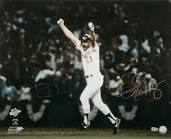
Gibson2

His amazing feat did provide a Home Run of incomparable distinction. And it did win that First Game of the “Series,” in abrupt and miraculous fashion. But the intangible essence of that single act of unfathomable “Heroism” also unlocked a momentarily imprisoned spirit of Team unity that suddenly “empowered” the Dodgers to claim the 1988 World Series Title, even without Kirk playing another moment of any of the remaining 4 games.

Kirk Gibson’s Home Run was truly the “single-most amazing performance piece in Sports history.”
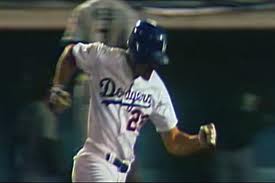
kirk gibson3

Postscript:

As unlikely as Kirk Gibson’s conquest was at that momentous October event, what more climactic expression of exaltation could be spontaneously delivered than that spoken by Baseball’s “immortal bard,” Vin Scully, when he exclaimed, as Kirk was rounding the bases, “In a year that has been so ‘improbable,’ the ‘Impossible’ has occurred.” Truer words were never spoken.

No one in the world could have expected Gibson’s humble yet triumphal salute, “I came; I saw; I conquered!” And for the last 29 years, legions of followers have echoed the words of another prominent and renowned sportscaster (Joe Buck) as he commented repeatedly, in breathless exuberance, “I DON’T BELIEVE WHAT I JUST SAW! I DON’T BELIEVE… WHAT I JUST SAW”!

Nothing in Sports History can equate to Kirk Gibson’s “improbable” and “impossible” act of courage and accomplishment. The only historical event that would have shared in equipollence would have been “The Battle of Thermopylae,” if this Spartan warrior had been there to defeat the Persians.